



The Pancreatic and Biliary Disease Unit at barnaclínic+ offers the possibility to arrange an appointment with our centre via the internet. Once your request has been made, we'll get in touch with you, while trying to respect your preferences as much as possible.
THE UNIT
The Pancreatic and Biliary Diseases Unit is made up of the following specialists:

Pancreatic surgery
The surgical team is highly specialized in pancreatic surgery and in the comprehensive management of pancreatic diseases, including advanced tumors and pancreatic and biliary cystic neoplasms. The team has extensive experience in high-complexity pancreatobiliary surgery and leads programs in robotic pancreatic surgery. In addition, our team is a reference center for advanced intraoperative ablative techniques, such as irreversible electroporation, integrated into a precise and personalized surgical approach.
MORE INFORMATION ABOUT PANCREATIC SURGERY AT BARNACLÍNIC+

Diagnostic and therapeutic endoscopy
Our digestive endoscopy team is specialized in the diagnosis and endoscopic management of pancreatic diseases and biliary tract disorders, with a solid clinical and scientific background in this field. Clinical care is complemented by intensive research activity, reflected in numerous specialized publications that contribute to scientific progress and continuous improvement of treatments.
REQUEST AN APPOINTMENT WITH THE DIGESTIVE ENDOSCOPY TEAM

Oncology
We have an expert medical oncology team with extensive experience in the oncological treatment of pancreatic diseases and biliopancreatic neoplasms. The team also leads chemotherapy clinical trial programs for patients who are not initially candidates for surgical treatment, with the aim of offering advanced therapeutic alternatives based on scientific evidence.
MORE INFORMATION ABOUT MEDICAL ONCOLOGY AT BARNACLÍNIC+

Interventional radiology
The interventional radiology team is specialized in the percutaneous treatment of hepato-bilio-pancreatic neoplasms, with solid experience in angioradiological procedures and advanced ablative techniques. This minimally invasive approach allows the team to offer precise and effective therapeutic options, integrated into the multidisciplinary management of pancreatic diseases and hepatobiliary conditions.
REQUEST AN APPOINTMENT WITH THE INTERVENTIONAL RADIOLOGY TEAM

Pain management
The specialized pain management team has extensive experience in treating pain associated with pancreatic tumors and chronic inflammatory pancreatic diseases. Their intervention is integrated into a multidisciplinary approach aimed at improving pain control, quality of life, and overall well-being in patients with pancreatic diseases.
REQUEST AN APPOINTMENT WITH THE PAIN MANAGEMENT TEAM

Psychology
We have a Psychology team specialized in the evaluation, diagnosis, and therapeutic management of mental disorders, as well as the emotional, behavioral, and cognitive components associated with pancreatic diseases. Their intervention provides comprehensive psychological support for patients with complex conditions, contributing to more humane, coordinated, and patient-centered care.
REQUEST AN APPOINTMENT WITH PSYCHOLOGY

Nutrition
Our Nutrition team is specialized in pre- and postoperative nutritional optimization for patients with pancreatic diseases. Their intervention is essential to improve treatment tolerance, support recovery after pancreatic surgery, and contribute to a comprehensive and personalized approach to pancreatic conditions.
WHY CHOOSE THE PANCREATIC AND BILIARY TRACT DISEASE UNIT AT BARNACLÍNIC+?
The professionals that make up the pancreatic and biliary tract disease Unit at barnaclínic+ work in a hyper specialised way on the treatment of these pathologies, offering the maximum commitment to their patients thanks to their teamwork.

QUALITY, SAFETY AND EXPERIENCE
At barnaclínic+ we offer quality and proportionate care by specialists of global recognition whose treatment in our unit guarantees patient safety by putting them in the best hands.

PIONEERS
Our team is made up of professionals at the vanguard of research to offer all the available options in the treatment of the given pathology (robotic surgery and minimally invasive, irreversible electroporation and ablative treatments, diagnostic endoscopy and advanced therapy).

THE BEST FACILITIES
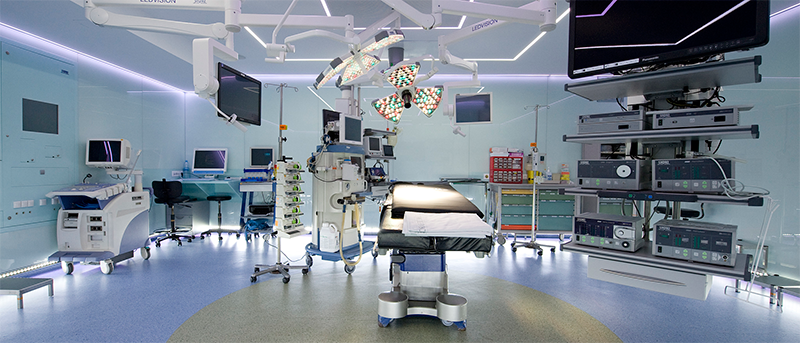
Our centre has healthcare facilities with cutting-edge technology, allowing for safety and efficiency in the treatment of our patients.

ACCESSIBILITY AND COMFORT
Our team is able to adapt to the individual needs of each patient in order to offer the best care available.
HELPLINES - PATHOLOGIES THAT WE TREAT
This is a list of the most frequent diseases of the pancreas and the biliary tracts that we treat, in the links and in our blog you'll find more information.
PANCREATIC AND BILIARY TRACT TUMOUR
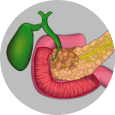
Pancreatic and biliary tract tumours are the most aggressive of the digestive tract. Among the factors that determine survival, the speed with which they are treated is the most important. Surgery is the fundamental treatment and the patient's prognosis depends directly on its result. The location of the pancreas inside the abdominal cavity and its relationship both vascular and with adjacent organs add complexity to the surgical intervention. The surgical approach in centres with great experience such as ours can even be laparoscopic or robotic depending on the location and characteristics of the tumour.
PANCREATIC CYST AND CYSTIC NEOPLASM
Pancreatic cystic lesions encompass a combination of entities with different potential for malignization. The study and diagnosis of these lesions are of vital importance, even though the majority of them require surgical intervention to carry out the definitive study and avoid the development of pancreatic cancer. The selection of candidate patients for surgery is carried out via a multidisciplinary process that takes into account clinical, analytical, radiological and endoscopic aspects. Laparoscopic surgery and robotic surgery allow for an early recovery.
NEUROENDOCRINE TUMOUR
Neuroendocrine tumours are tumours made up of specialised cells, they present characteristics of nerve cells, such as endocrine cells (hormonal production). The diagnosis and treatment of these tumours depends on their location, hormonal production, growth and if they have spread to other parts of the body.
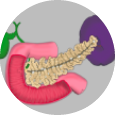
ACUTE AND CHRONIC PANCREATITIS
Acute pancreatitis is a disease caused by various mechanisms and at first requires a symptomatic treatment in mild cases. In more serious cases it can evolve and cause necrosis in the pancreatic tissue that can mean a loss in the pancreas' production capacity. In these cases surgery might be necessary to carry out resection of the non-viable tissue in order to avoid complete loss of the pancreas.
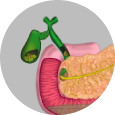
GALLBLADDER AND BILIARY TRACT STONES
In the case of pancreatitis of biliary origin, it is produced by the presence of lithiasis or stones in the biliary tract (cololithiasis) and the surgical extraction of the biliary tract is the treatment of choice to avoid future episodes.
DIAGNOSIS OF PANCREATIC AND BILIARY TRACT DISEASES
Early diagnosis in these patients allows for, in the case of malignant pathology, a greater possibility of carrying out greater treatment with higher success rates. Diagnosis of pancreatic and biliary tracts diseases is based on the use of radiological and endoscopic techniques to subsequently make an evaluation in the specialist committee.

Diagnostic Imaging
The diagnostic imaging team is equipped with state-of-the-art technology to ensure accurate diagnosis of pancreatic diseases and hepatobiliary conditions. When required, the interventional radiology unit provides percutaneous treatments and advanced angio-radiological procedures, integrated into a coordinated, minimally invasive care model.

Diagnostic and Therapeutic Endoscopy
In the management of pancreatic pathology, endoscopy plays a key role in enhancing imaging diagnosis and enabling tissue sampling through biopsy. It also allows for stent placement and the performance of minimally invasive endoscopic treatments. The specialized endoscopy team has extensive experience in diagnostic and therapeutic procedures for pancreatic diseases, within a highly specialized, multidisciplinary approach.
Si quieres, en un siguiente paso puedo ajustar aún más el SEO (variantes léxicas, sinónimos médicos, keywords long-tail) o adaptar el registro para microsite, landing o dossier médico.
PROFESSIONALS IN THE UNIT



BLOG OF THE PANCREAS AND THE BILIARY TRACT
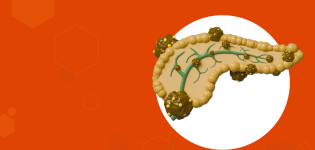
Pancreatic Neuroendocrine Tumor: What it is, symptoms, treatment and life expectancy
A relatively common consultation is the incidental discovery of a tumor in the pancreas during an imaging test. Upon receiving this diagnosis, the first thing the patient thinks of is pancreatic cancer, but it is classified by the radiologist as a neuroendocrine tumor of the pancreas. What is it? Is it malignant? Do we need […] La entrada Pancreatic Neuroendocrine Tumor: What it is, symptoms, treatment and life expectancy aparece primero en Blog de Cirugía del Páncreas.
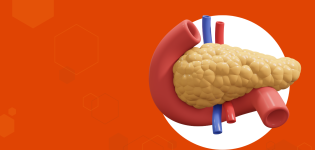
What is the pancreas, what function does it have and what diseases can it develop?
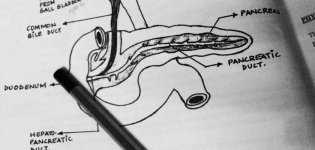
The pancreas is a fundamental organ for the digestion of food. It is a gland that makes up part of the digestive system that has a structure with a long shape that weighs 200 grams and measures 20cm in length and is made up of three parts: a head, a body and a tail. It […] La entrada What is the pancreas, what function does it have and what diseases can it develop? aparece primero en Blog de Cirugía del Páncreas.
What happens to pancreatic function after surgery?
One of the issues that often generates a great deal of confusion between patients and doctors is changes in pancreatic function following surgery and how to treat it. The worsening of the different pancreatic functions is a well-studied phenomenon, which does not occur in all patients. However, its diagnosis can help to ensure a postoperative period with fewer complications, […] La entrada What happens to pancreatic function after surgery? aparece primero en Blog de Cirugía del Páncreas.