



Do you have memory problems or are you looking for a specialist Alzheimer’s assessment?
Our team can assess your case, carry out the necessary tests and recommend the most appropriate treatment and follow-up options for you.
What is Alzheimer's disease?
What is Alzheimer’s disease?
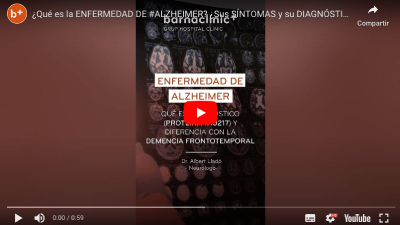
Alzheimer’s is a progressive neurodegenerative disease that primarily affects memory, but can also impair other cognitive functions such as language, orientation, reasoning and the ability to carry out everyday activities.
The disease is characterised by different biological changes in the brain, including the abnormal accumulation of beta-amyloid and tau proteins, which begins years before symptoms become apparent and progressively contributes to neuronal damage and loss.
Although age is the main risk factor, Alzheimer’s disease is not a normal part of ageing. Occasionally forgetting a name or where we have left an object can be common as we age; however, when memory problems are persistent, progressive or begin to interfere with everyday life, a specialist assessment is recommended.
Early diagnosis makes it possible to distinguish Alzheimer’s disease from other causes of cognitive impairment, determine the stage of the disease and establish the most appropriate treatment and follow-up for each patient.
What are the early symptoms of Alzheimer’s disease?
The early symptoms of Alzheimer’s disease can vary from person to person and do not always begin solely with memory problems. In the early stages, subtle changes may appear that gradually become more frequent or begin to interfere with everyday activities.
Signs that may indicate the need for a specialist assessment include:
Recent memory loss
Forgetting recent conversations, appointments or events, repeatedly asking the same questions, or increasingly relying on reminders for information that was previously remembered without difficulty.

Disorientation
Becoming disoriented in familiar places, having difficulty following a familiar route, or progressively losing track of dates and the passage of time.

Language problems
Difficulty finding certain words, following a conversation or clearly expressing an idea that could previously be communicated without difficulty.

Difficulty planning or completing tasks
Problems organising activities, managing finances, following instructions or carrying out everyday tasks that were previously familiar.

Changes in behaviour or personality
Apathy, irritability, loss of initiative, social withdrawal or other changes in behaviour that are unusual for the person may appear.

Difficulty carrying out everyday activities
As the disease progresses, difficulties may arise in independently carrying out familiar everyday tasks, both at home and outside the home.
Experiencing any of these symptoms does not necessarily mean that a person has Alzheimer’s disease. Memory problems and cognitive impairment can have many different causes, some of which may be treatable.
Therefore, when these changes are persistent, progressive or affect a person’s independence, it is important to undergo a specialist neurological assessment.
Are you concerned about your memory problems or those of a family member?
A specialist Alzheimer’s diagnosis can help determine what is causing the symptoms and establish the next steps.
How is Alzheimer’s disease diagnosed?
An Alzheimer’s diagnosis does not depend on a single test. It requires the integration of the patient’s medical history, neurological and cognitive assessments and, when indicated, different tests capable of identifying the biological changes associated with the disease.
At barnaclínic+, we carry out a personalised diagnostic assessment to determine whether the symptoms are consistent with Alzheimer’s disease, distinguish them from other causes of cognitive impairment and characterise the disease as accurately as possible. This precision diagnosis has become particularly important with the introduction of new disease-modifying treatments, as determining whether a patient may be a candidate requires biological confirmation of Alzheimer’s disease and identification of the stage of the disease.
Neurological and neuropsychological assessment
The assessment begins with a detailed medical history and neurological examination. A neuropsychological assessment provides an objective evaluation of memory and other cognitive functions, including attention, language, executive functions and orientation.
These tests help determine which abilities are affected, establish the severity of the impairment and distinguish between normal ageing, mild cognitive impairment, Alzheimer’s disease and other possible causes.

Blood biomarkers for Alzheimer’s disease
Advances in biomarkers are making it possible to obtain increasingly detailed information about the biological processes associated with Alzheimer’s disease through a blood test.
These include p-tau217, a biomarker associated with the amyloid and tau protein changes characteristic of the disease. Measuring p-tau217 can help identify patients with a high probability of having Alzheimer’s pathology and determine when further testing is needed to complete the diagnostic assessment.
Blood biomarkers should not be interpreted in isolation: their results must be assessed within the clinical context by specialists experienced in cognitive disorders.
Neuroimaging tests: brain MRI and PET scans
Neuroimaging tests make it possible to assess brain changes associated with Alzheimer’s disease and rule out other possible causes of the symptoms. A brain MRI can identify structural abnormalities and is also important when assessing the suitability and safety of certain new treatments. In selected cases, a brain PET scan can be used to assess brain metabolism or detect proteins associated with the disease, such as beta-amyloid, helping to confirm the presence of amyloid pathology in the brain.
Cerebrospinal fluid analysis
Analysis of cerebrospinal fluid obtained through a lumbar puncture makes it possible to assess biomarkers related to beta-amyloid and tau and obtain precise information about the biological processes characteristic of Alzheimer’s disease.
It can be used to confirm the diagnosis when the patient’s characteristics or the results of other tests indicate that further assessment is necessary.

Genetic testing
In selected cases, genetic testing may be indicated, particularly when there is a family history of the disease or when Alzheimer’s develops at an unusually young age.
Genetics has also become important for certain disease-modifying treatments. ApoE genotyping may be necessary to assess whether a treatment is appropriate and to estimate certain treatment-related risks.
Is there a test or blood test to detect Alzheimer’s disease?
There is no single Alzheimer’s test that can confirm or rule out the disease on its own. Diagnosis requires combining clinical and cognitive assessment with different diagnostic tests.
Today, blood biomarkers such as p-tau217 can help detect biological changes associated with Alzheimer’s disease in a less invasive way and identify which patients need further testing to complete the diagnostic assessment.
Cognitive tests are also available to detect changes in memory and other cognitive functions. However, neither a cognitive test nor a blood test can establish a diagnosis of Alzheimer’s disease on its own.
At barnaclínic+, we integrate neurological and neuropsychological assessment, biomarkers, neuroimaging tests and any other necessary investigations into a personalised diagnostic process.
Alzheimer’s treatment: how can we help?
Alzheimer’s treatment should be tailored to the stage of the disease, each patient’s individual characteristics and their needs. At barnaclínic+, we offer a personalised approach that combines new treatments designed to slow disease progression, pharmacological treatments to manage symptoms and non-pharmacological therapies, together with specialist follow-up for patients and their families.
In recent years, the introduction of treatments targeting some of the biological processes involved in Alzheimer’s disease has expanded the therapeutic options available, particularly for certain patients diagnosed in the early stages.

New treatments to slow the progression of Alzheimer’s disease
The introduction of treatments targeting the beta-amyloid protein represents an important change in the treatment of Alzheimer’s disease. Unlike medications used to relieve certain symptoms, these new therapies aim to act on the underlying course of the disease and slow cognitive and functional decline.
New medicines are now authorised in Europe for certain patients with mild cognitive impairment or mild dementia due to Alzheimer’s disease, provided they meet specific clinical and biological criteria.

Lecanemab (Leqembi®)
Lecanemab is a monoclonal antibody targeting beta-amyloid that has been shown to slow cognitive and functional decline in certain patients with early Alzheimer’s disease.
Before treatment can be considered, the presence of amyloid pathology must be confirmed and a specialist assessment is required to determine whether the patient meets the necessary criteria and can receive the treatment safely.
MORE INFORMATION ABOUT LECANEMAB

Donanemab (Kisunla®)
Donanemab is another treatment targeting beta-amyloid that is authorised for certain patients with early-stage Alzheimer’s disease. Its aim is to reduce amyloid plaques accumulated in the brain and slow the progression of the disease.
As with Lecanemab, a specialist assessment is required before starting treatment to confirm whether it is indicated and establish the appropriate treatment and follow-up protocol.
MORE INFORMATION ABOUT DONANEMAB

Pharmacological treatments for symptoms
In addition to the new disease-modifying therapies, there are medications that can treat certain symptoms of Alzheimer’s disease and help maintain cognitive and functional abilities for longer.
These include acetylcholinesterase inhibitors, such as donepezil, rivastigmine and galantamine, as well as memantine. Their use depends on the stage of the disease and the individual characteristics of each patient.
Pharmacological treatment should be reviewed regularly to assess its effectiveness, tolerability and suitability as the disease progresses.

Non-pharmacological treatment and cognitive stimulation
Alzheimer’s treatment also includes interventions designed to maintain cognitive abilities, independence and quality of life for as long as possible.
Cognitive stimulation, physical exercise, speech and language therapy when indicated, a healthy diet, maintaining social relationships and adapted daily routines may all form part of the treatment plan.
These interventions are tailored to each patient’s individual situation and disease progression and complement pharmacological treatment.

Patient follow-up and family support
Alzheimer’s is a progressive disease, and patients’ needs change over time. Specialist follow-up therefore makes it possible to adapt treatment, identify new needs and anticipate potential complications.
Support also extends to family members and caregivers, providing information and guidance to help them understand the progression of the disease and manage the changes that may arise at different stages.
Would you like to know which treatment options may be suitable for you?
Our team can assess the diagnosis, the stage of the disease and each patient’s individual characteristics to establish a personalised treatment plan.
Why choose barnaclínic+ for the diagnosis and treatment of Alzheimer's?
Alzheimer’s disease requires a specialist approach that integrates precision diagnosis, treatment and follow-up. At barnaclínic+, we provide personalised care for patients with memory problems, cognitive impairment and Alzheimer’s disease, from the earliest stages and throughout the course of the disease.

Specialist team in Alzheimer’s disease and cognitive disorders
The Memory and Cognitive Disorders Unit at barnaclínic+ includes professionals specialising in Alzheimer’s disease, cognitive impairment and other forms of dementia, with extensive experience in their diagnosis, treatment and follow-up.
Our multidisciplinary approach makes it possible to jointly assess the neurological, cognitive and functional aspects of each patient and establish a care strategy tailored to their individual needs.

Access to new treatments for Alzheimer’s disease
The introduction of new treatment options for Alzheimer’s disease has expanded the therapeutic possibilities for certain patients in the early stages of the disease.
Our team can carry out the necessary assessment to determine whether a patient meets the criteria for these new treatments and, when they are indicated and available, plan their administration and specialist follow-up.

Personalised treatment and ongoing follow-up
Not all patients with Alzheimer’s disease experience the same progression or have the same needs. Treatment is therefore tailored to each individual and reviewed regularly to adapt it to changes in their clinical and cognitive condition.
Our aim is to provide the most appropriate diagnostic, therapeutic and support options for the patient and their family at every stage.

Care for patients from outside Barcelona
Patients living outside Barcelona or in other countries can have an initial assessment via video consultation, provide their available medical reports and test results, and receive guidance on the next steps.
When diagnostic tests or treatments need to be carried out in person, our team can organise and coordinate the care process in Barcelona.

Experience and innovation at Hospital Clínic de Barcelona
The specialists at barnaclínic+ work within the Hospital Clínic de Barcelona environment, a leading centre in neurology, Alzheimer’s disease and other cognitive disorders.
This connection enables private patients to benefit from the clinical experience and knowledge generated within a hospital environment with extensive clinical, teaching and research activity in neurodegenerative diseases.
Frequently Asked Questions About Alzheimer's Disease
When should I see a specialist about memory problems?
Occasional forgetfulness can occur with age and does not necessarily mean that a person has a medical condition. A specialist assessment is recommended when memory problems are persistent, progressive, accompanied by changes in other cognitive abilities or begin to interfere with everyday life.
It may also be advisable to seek specialist advice when family members or people close to the person notice changes that the individual may not be aware of.
How is Alzheimer’s disease diagnosed?
An Alzheimer’s diagnosis combines neurological and neuropsychological assessment with different tests selected according to each individual case. These may include blood biomarkers such as p-tau217, MRI, brain PET scans, cerebrospinal fluid analysis or genetic testing.
These tools can help confirm or rule out the disease, distinguish it from other causes of cognitive impairment and determine its stage.
Is there a test for the early detection of Alzheimer’s disease?
We now have biomarkers capable of detecting biological changes associated with Alzheimer’s disease, even in its early stages. These include blood biomarkers such as p-tau217 and other tests for beta-amyloid and tau.
However, there is no single test that can diagnose Alzheimer’s disease in every patient. The results must be interpreted alongside the patient’s medical history and cognitive assessment by a specialist team.
Can Alzheimer’s disease be treated?
Yes. Although there is currently no treatment that can cure Alzheimer’s disease, there are different options for managing its symptoms and, for certain patients in the early stages, new medicines designed to slow the progression of cognitive and functional decline.
Treatment should be tailored to the diagnosis, stage of the disease and individual characteristics of each patient.
What are the new treatments for Alzheimer’s disease?
New treatments designed to modify the course of the disease include Lecanemab (Leqembi®) and Donanemab (Kisunla®), monoclonal antibodies targeting the beta-amyloid protein.
These medicines are indicated only for certain patients with early-stage Alzheimer’s disease and require a specialist assessment, confirmation of amyloid pathology and a specific treatment and follow-up protocol.
Who can receive treatment with Lecanemab or Donanemab?
Not everyone with Alzheimer’s disease can receive these treatments. Eligibility depends, among other factors, on the stage of the disease, confirmation of beta-amyloid pathology, ApoE genotype, MRI findings, and the patient’s medical history and current treatments.
The only way to determine whether Lecanemab or Donanemab may be an option is through a specialist assessment.
Can the progression of Alzheimer’s disease be slowed?
It is currently not possible to completely stop or reverse Alzheimer’s disease. However, treatment can help manage certain symptoms and slow disease progression in some patients.
The introduction of new disease-modifying treatments further reinforces the importance of obtaining an accurate diagnosis in the early stages.
Can I request a second opinion on an Alzheimer’s diagnosis?
Yes. At barnaclínic+, we can provide a specialist second opinion, review the diagnosis and tests previously carried out, and assess whether further tests or biomarkers are needed to complete the diagnostic process.
This assessment can also be used to review the different therapeutic options and determine whether the patient may be a candidate for one of the new treatments for Alzheimer’s disease.
Can I have an initial consultation if I live outside Barcelona?
Yes. Patients living outside Barcelona can request an initial assessment via video consultation and provide their available medical reports and test results in advance.
The specialist can review the case and advise whether further tests, an in-person consultation or possible treatment at barnaclínic+ may be necessary.
ALZHEIMER'S DISEASE EXPERT TEAM


Memory and Cognitive Disorders Blog

Frontotemporal dementia: symptoms, diagnosis, and available treatments
Frontotemporal dementia (FTD) is a type of neurodegenerative dementia less common than Alzheimer’s disease, but with a great impact on the patient’s life and their environment. Unlike other dementias, it usually begins at an earlier age, between 45 and 65 years, and its main symptom is not related to memory, but to behavior. What is […] La entrada Frontotemporal dementia: symptoms, diagnosis, and available treatments se publicó primero en Blog de Memoria y Trastornos Cognitivos de barnaclínic+.

Cognitive decline: key facts for early detection and treatment
Cognitive decline is a process involving the loss of mental functions such as memory, language or planning ability. It mostly affects older adults, although it can occur at any age. Recognising the early signs and understanding the different stages of cognitive decline is essential to prevent its progression to more severe forms. “We aim to […] La entrada Cognitive decline: key facts for early detection and treatment se publicó primero en Blog de Memoria y Trastornos Cognitivos de barnaclínic+.