



4 February, 2026
New advances in pancreatic cancer: how they may change prognosis and life expectancy
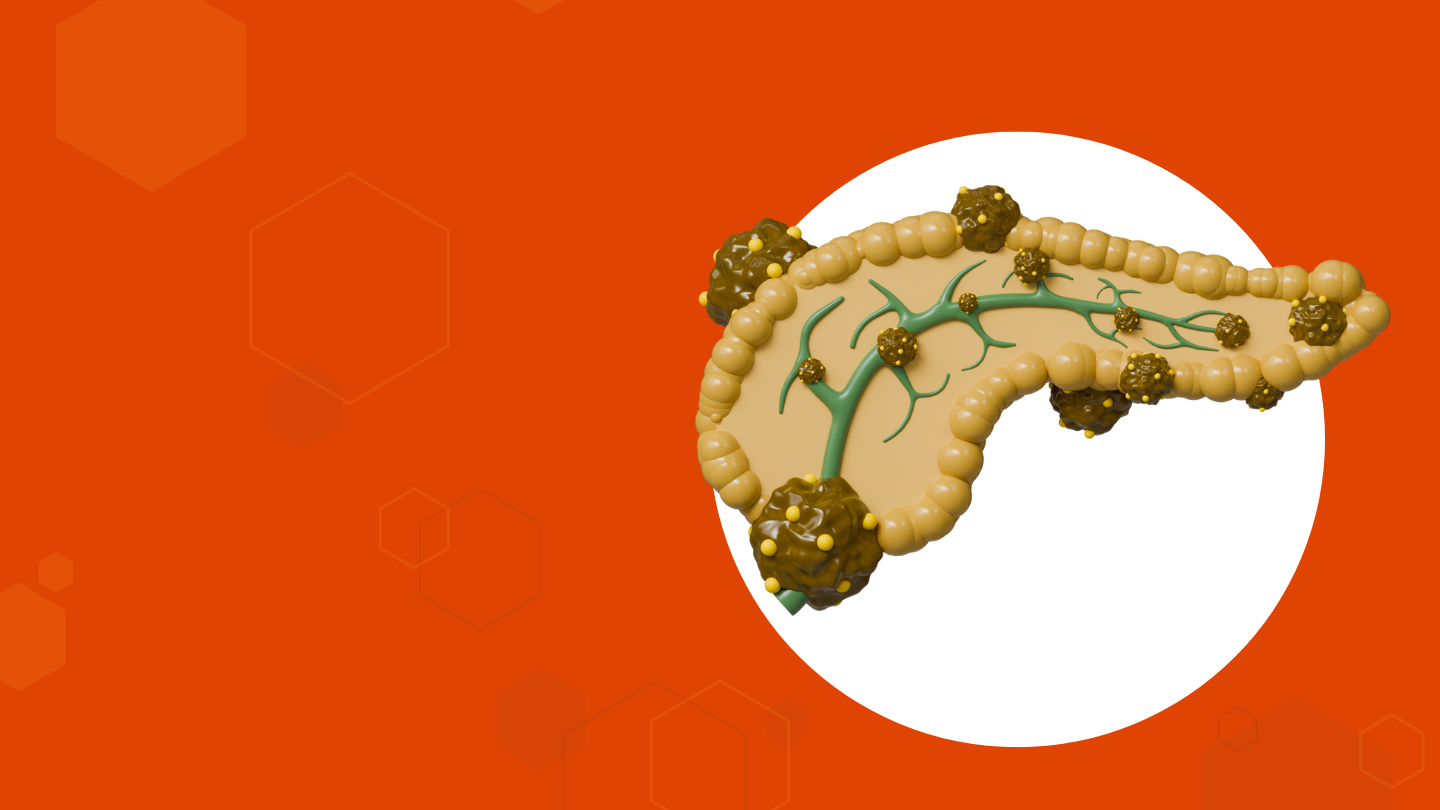
Pancreatic cancer remains one of the tumours with the poorest prognosis in oncology. The difficulty of detecting it at early stages and the limited effectiveness of current treatments explain why pancreatic cancer life expectancy is still low, especially in advanced stages or when metastases are present.
In this context, recent preclinical results published by the team led by Dr. Mariano Barbacid at the Centro Nacional de Investigaciones Oncológicas (CNIO) have generated significant scientific interest: a triple therapy targeting KRAS succeeded in eliminating pancreatic cancer tumours in murine models, while also preventing the development of resistance.
To understand the real clinical significance of these advances, Dr. Teresa Macarulla, medical oncologist at barnaclínic+ and Head of the Medical Oncology Department at Hospital Clínic de Barcelona, provides an expert and rigorous perspective.
Research in pancreatic cancer: what do these new studies contribute?
The CNIO study focuses on pancreatic ductal adenocarcinoma, the most common type of pancreatic cancer, characterised by its high aggressiveness and resistance to treatment.
Dr. Macarulla stresses the importance of putting these results into context and avoiding misinterpretation: “The results are very interesting, but still very preliminary, because they are data from murine models, not from patients”. This nuance is crucial, particularly for people seeking answers about whether pancreatic cancer has a cure or whether it is possible to cure pancreatic cancer with new therapies outside an experimental setting.
“The results are very interesting, but still very preliminary, because they are data from murine models, not from patients”
Dr. Teresa Macarulla – Medical Oncologist at barnaclínic+ and Head of the Medical Oncology Department at Hospital Clínic de Barcelona

For reliable clinical information, you can also consult the Hospital Clínic de Barcelona page on pancreatic cancer.
From the laboratory to patients: efficacy and safety
In oncology, demonstrating that a strategy works in animal models is only the first step. The next challenge is to translate these results into clinical practice through controlled trials in humans.
As Dr. Macarulla explains, it is first necessary to confirm that the therapy works in murine models and subsequently “to test the strategy in humans and demonstrate efficacy, but also to assess the safety of the therapy in patients”. This process is particularly demanding in pancreatic cancer, a disease for which pancreatic cancer survival remains limited.
Pancreatic cancer treatment and current prognosis
The prognosis of pancreatic cancer remains unfavourable in many cases, mainly due to late diagnosis. The disease is often silent in its early stages, and early symptoms are not always clear or specific (for example, some people search for two early signs of pancreatic cancer).
According to Dr. Macarulla, “the main difficulty of pancreatic cancer is that the disease is silent in its initial phase and, therefore, most patients are diagnosed at advanced stages”.
At present, “the only tool we have to treat the disease is chemotherapy, with moderate results”. For this reason, understanding the treatment options for pancreatic cancer and the most appropriate approach at each stage is key to setting realistic expectations regarding survival and life expectancy, particularly in advanced or metastatic cases.
Pancreatic cancer surgery: when a curative goal is pursued
In selected cases, and when the tumour is resectable, surgery may offer a treatment option with curative intent. However, this possibility depends on the stage of the disease, the patient’s overall condition and the technical feasibility of the procedure.
If you would like to learn more about this approach, you can consult the Pancreatic Surgery Unit at barnaclínic+ and the specific content available on our blog.
At barnaclínic+, we manage these cases through a highly specialised unit:
Can pancreatic cancer be eliminated with surgery?
Goals of pancreatic surgery
More articles about pancreatic cancer
Clinical trials and KRAS inhibitors: hope with scientific rigor
One of the most promising aspects of the CNIO study is the role of the KRAS gene, which is mutated in most cases of pancreatic cancer and plays a key role in tumour development. Dr. Macarulla highlights that this strategy “is already being tested in clinical trials” and that “preliminary results in patients with pancreatic cancer are very encouraging”.
From the specialist’s perspective, the message for patients and families must be one of hope, but with realism: the advances are relevant, but they still do not allow us to state that pancreatic cancer has a cure in routine clinical practice.
She also confirms that clinical trials with new therapeutic strategies will be open at our centre during 2026, allowing selected patients access to innovative treatments within a highly specialised environment.
Pancreatic cancer today: advancing research, specialised care
Although it cannot yet be stated that pancreatic cancer has a cure, advances in research are laying the groundwork to improve prognosis, pancreatic cancer survival and patients’ quality of life, especially when expert care, personalised treatments and access to clinical trials are combined.
At barnaclínic+, we are committed to comprehensive care based on scientific rigor, access to therapeutic innovation and collaboration with reference centres such as Hospital Clínic de Barcelona.