



21 April, 2026
barnaclínic+, first private center in Spain with ACORYS®, non-invasive cardiac mapping technology for complex arrhythmias

The Arrhythmia Unit at barnaclínic+, made up of specialists from Hospital Clínic de Barcelona such as Dr. Ivo Roca and Dr. Andreu Porta, is the first private center in Spain and one of the first in Europe to incorporate ACORYS®, an advanced non-invasive cardiac mapping technology that allows the heart’s electrical activity to be analyzed with great precision.
The ACORYS® system, developed by Corify Care, a spin-off of the Polytechnic University of Valencia, represents a new generation of cardiac electrophysiology tools based on mathematical modeling and artificial intelligence applied to clinical practice. This innovation marks an advance in the diagnosis and treatment of complex arrhythmias, as it makes it possible to obtain a global electrical map of the heart in just a few minutes and in a single heartbeat, helping identify the origin of certain heart rhythm disorders.
“We can reach a diagnosis much faster and focus on treatment sooner, without prolonging the procedure”
Dr. Ivo Roca, specialist in arrhythmias and cardiac electrophysiology
 “We can reach a diagnosis much faster and focus on treatment sooner, without prolonging the procedure”
Its incorporation places barnaclínic+ among the centers already using advanced electrocardiographic mapping technologies, available at leading international institutions in cardiac electrophysiology, further strengthening its position as a specialized center for the treatment of cardiac arrhythmias.
What is non-invasive cardiac mapping and why does it provide a global view?
Cardiac arrhythmias can be complex and, in many cases, require precise identification of the exact point in the heart where they originate in order to treat them effectively.
Unlike other systems that analyze the heart point by point, the ACORYS® system provides a global view of the electrical behavior of the entire heart simultaneously, representing a significant change in the way arrhythmias are studied.
As Dr. Andreu Porta points out, having this global view allows for a more complete understanding of each case and helps pinpoint the origin of the arrhythmia more accurately.
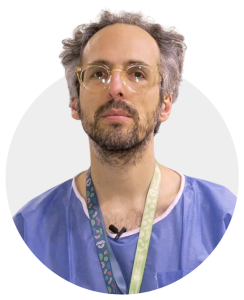
“In many arrhythmias, the main challenge is not only treating them, but locating them accurately”
Dr. Andreu Porta, specialist in electrophysiology and arrhythmia ablation
What this technology makes possible
- Obtaining information in a single heartbeat
- Simultaneously analyzing the heart’s entire electrical activity
- Improving the diagnosis of complex arrhythmias
- Optimizing treatment planning
A key tool for planning cardiac ablation
One of the main values of this technology is its ability to act as a complement to invasive catheter-based studies, providing prior information that helps guide the therapeutic strategy.
“Having this prior map allows us to approach ablation with greater precision and, in some cases, treat areas we had not previously identified”
How it helps before and during ablation
- Better defining the strategy before cardiac ablation
- Reducing uncertainty during the procedure
- Improving decision-making in complex arrhythmias
Especially useful in cases such as
- Complex atrial fibrillation
- Ventricular tachycardia
- Atrial flutter
- Arrhythmias of uncertain origin
YOU MAY ALSO BE INTERESTED IN
More advances in arrhythmias and electrophysiology
Easy integration into the clinical workflow
Another key aspect of this technology is its ease of integration into routine clinical practice, without adding complexity to the care process.
Far from delaying procedures, the use of ACORYS® provides relevant information before the intervention and integrates naturally into the workflow of the electrophysiology team.
“We are moving toward more precise, data-driven electrophysiology that allows us to better understand each case without adding complexity to the process”
Innovation supported by scientific evidence
The incorporation of this technology is supported by the latest scientific evidence. Studies published in international journals such as Heart Rhythm have demonstrated the value of non-invasive electrocardiographic mapping in identifying abnormalities in the heart’s electrical conduction associated with certain ventricular arrhythmias.
These advances reinforce the role of this technology as a complement to other diagnostic tests, such as cardiac MRI, in the assessment of arrhythmic risk and treatment planning.
barnaclínic+: experience in arrhythmia treatment in Barcelona
The Arrhythmia Unit at barnaclínic+ includes specialists from Hospital Clínic de Barcelona with extensive experience in the treatment of cardiac arrhythmias, including advanced cardiac electrophysiology and ablation techniques.
The incorporation of innovative technologies such as non-invasive cardiac mapping allows us to continue moving toward personalized medicine, offering each patient the most appropriate diagnosis and treatment.
ARRHYTHMIA ASSESSMENT WITH STATE-OF-ART TECHNOLOGY
Request a personalized assessment with specialists in arrhythmias and cardiac electrophysiology from Hospital Clínic de Barcelona.