

-
11 October, 2022
Nasal polyposis, an underestimated disease with limited treatment options

Nasal polyposis is a chronic inflammation of the paranasal sinuses. Due to this inflammation of the mucosa, whitish formations appear inside the nostrils, which are called nasal polyps. These are benign polyps, but they can grow to the point of completely obstructing the nostrils.
-
27 July, 2020
What are Skull Base Chordomas and what is its treatment?

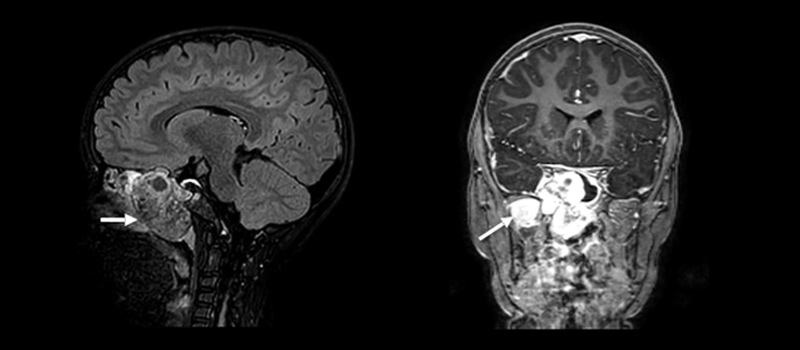
Chordoma is a rare type of tumor that occurs in the bones of the skull base and spine. These tumors arise from the remnants of the notochord, a flexible, rod-like structure that provides support to the developing embryo. Chordomas are complex tumors to treat due to the involvement of critical structures such as the brainstem, spinal cord, and important nerves and arteries. About 30 percent of all chordomas are form within the center of the head in an area called the skull base – usually in a bone called the clivus. Skull base chordomas are sometimes considered brain tumors because they can grow toward the brain.
-
15 April, 2019
Salivary gland tumour: Causes, symptoms, diagnosis and treatment
Salivary gland tumours are abnormal cells that grow, either in the salivary gland itself or in the ducts that drain them. Salivary glands are located around the mouth. They produce saliva, which moistens food to help us chew and swallow. Saliva also helps protect teeth from decay. Salivary gland tumours are a rare condition that are usually benign, slow growing and with a good prognosis.
-
17 January, 2019
What are skull base tumors?
The skull base is the area in between the eyes and behind the nose all the way up to the brain and spinal cord. It one of the/ or the more complex are in the whole body beacuse multiple nerves and the major blood vessels of the brain, head and neck pass through it. The skull base tumors are rare, affecting less than 1 in 100 000 people per year. They are histologically a diverse group of tumors and potentially pose significant management problems due to their close proximity to the orbit and intracranial cavity.